As social distancing has become essential for our safety during the pandemic, we are no longer meeting in person. We made the move online straight away, to enable the continuation of our workshops and keep our little community together.
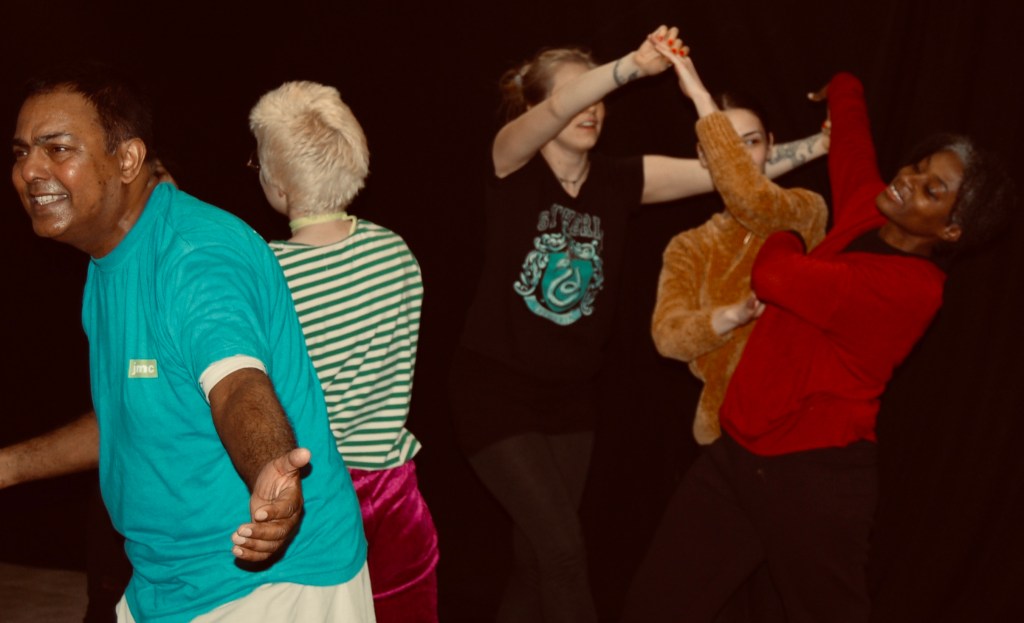
Today was our second online session as we gathered together to start moving the most we’d done all week (#quarantine-life). This week’s focus was on colours and the body, influenced by the notion of ‘chakras’.
The idea of chakras is common within ancient meditation practices. Each chakra represents one of your body’s energy centres which are said to bring balance to our physical, mental and emotional state and promote well-being.
Given the current circumstances, its safe to say we could all use some extra self-care, to keep ourselves balanced. In the workshop we used each of the chakras, or colours, to carry and focus our movement and to familiarise ourselves with the concept. It also allowed us to connect between them and really listen to our bodies.
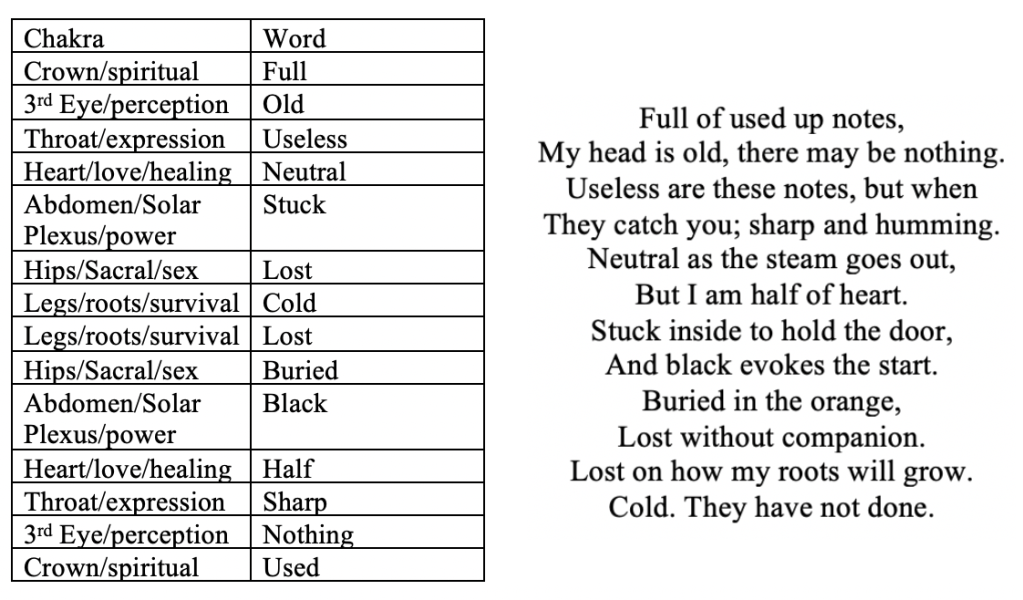
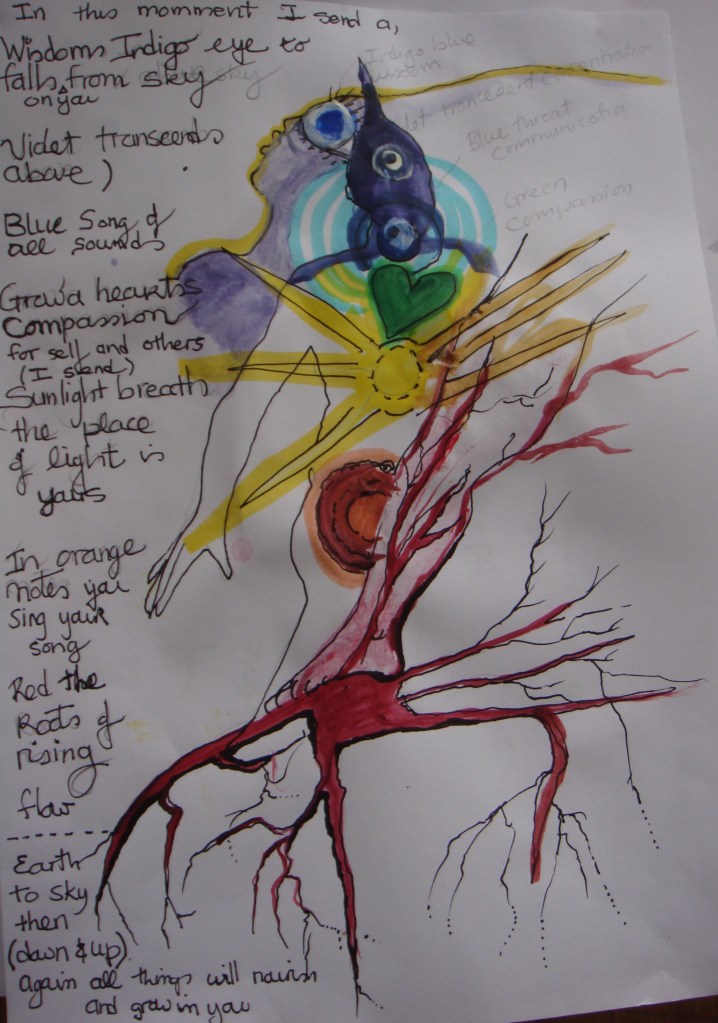
Our creative writing task was modelled on the very concept of chakras. We each wrote words down that sprung to mind when we thought about and focused on each of the seven energy centres. This created the framework for writing poems, haiku and art.
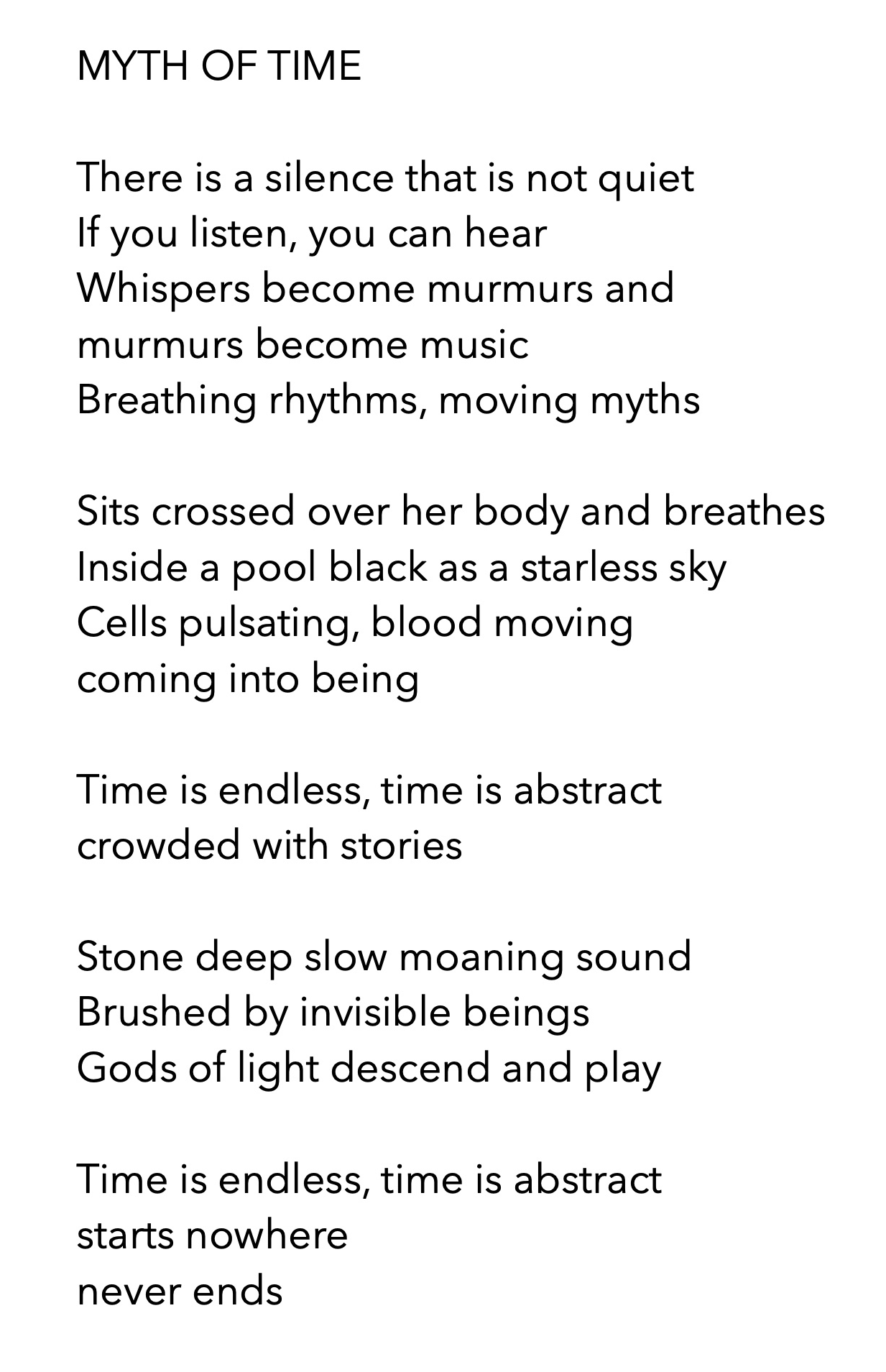
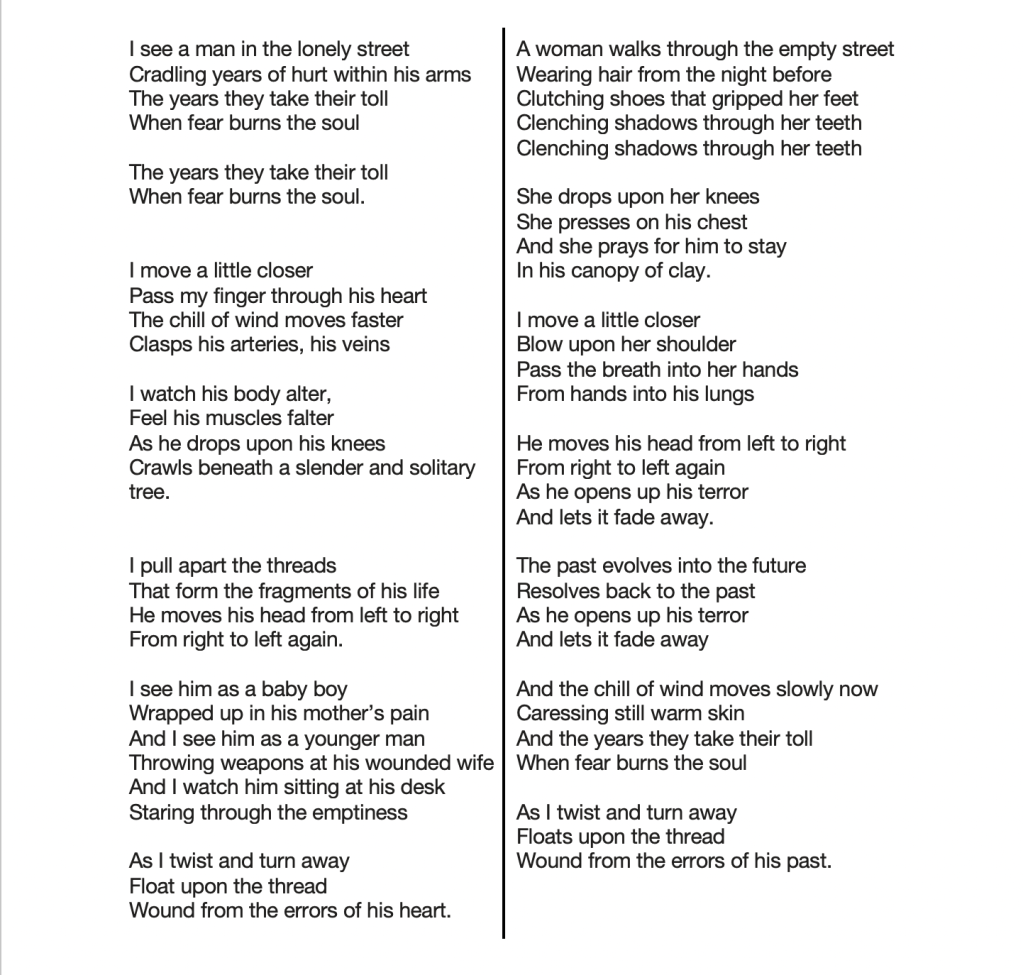
‘The start’
A poem by Rayanne Kelly
And a poem/painting by another member of the group:
To help us with our diction, Elise worked with us on a collection of well devised phrases to challenge our enunciation. We elongated each syllable without breaking between words.
Our move online has been an overall success with a continuing social network of support during these harsh times and still getting creative!
With the global pandemic affecting everyone’s reality, we need to keep safe. That means we can’t meet in the studio, but we can meet and keep moving, writing and singing online. We decided to do this right away. Sadly, some members can’t join us, due to health issues, aversion to the online medium or lack of access to fast internet. We are trying to reach them, but haven’t heard back from all of them. We send them our love wherever they may be, and hope they are safe and well.
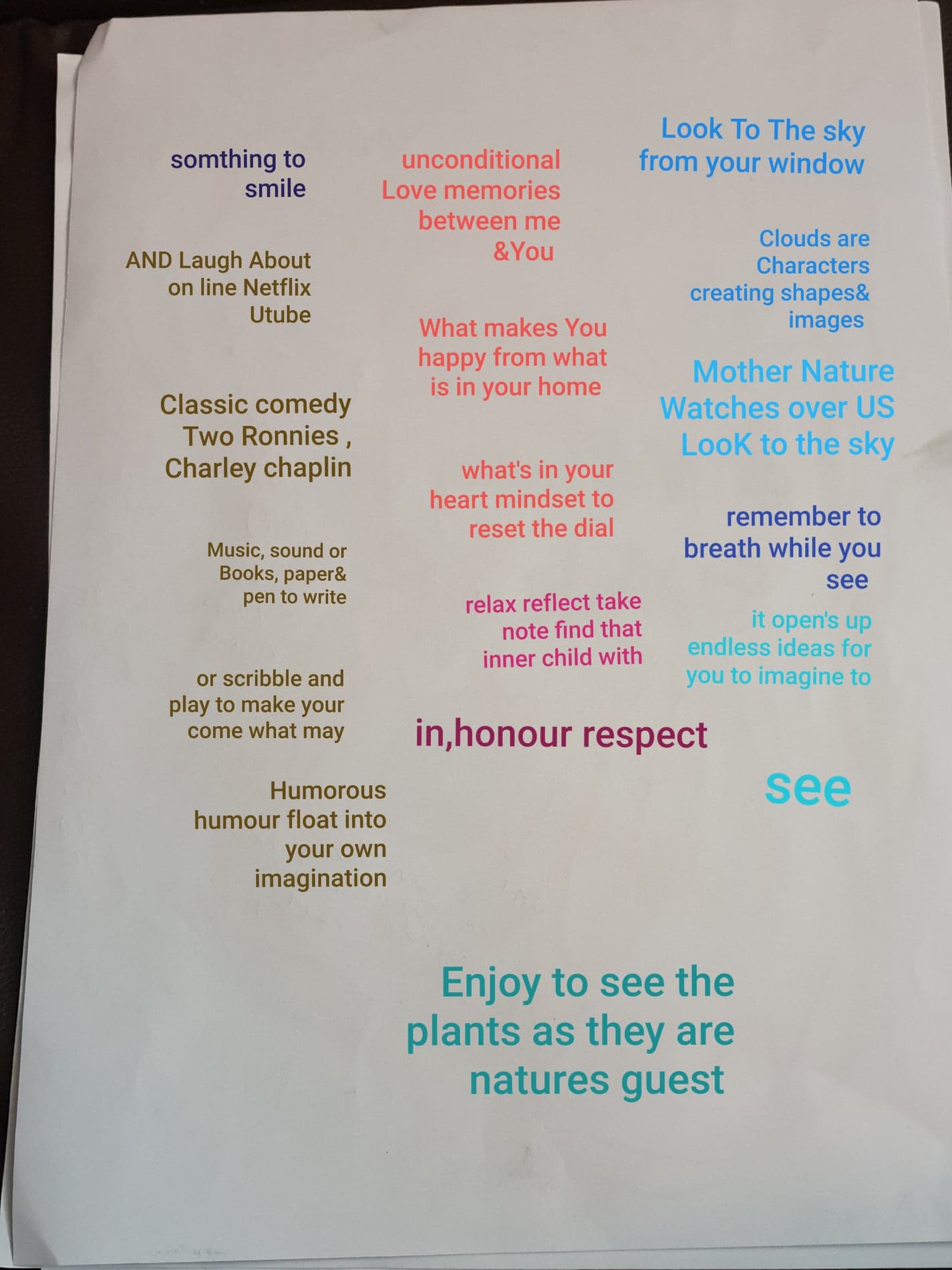
For the first session, we connected with our body and soul through movement and vocalisation. We were guided by the thought of sounds and words of comfort for ourselves and others.
Here are some comforting thoughts and words created by Zina at the workshop.
We asked our lovely ‘Red Hatters’ what they thought of the workshops and collected them here to demonstrate just how much people get out of Red Hat Opera workshops. It’s important for us to get feedback so that we can continue to grow and progress as a community.
Communication:
“Enjoyed it! I liked the fact that there was room for all different skills and ways into the performance so not just vocal or physical. It was possible to get caught up in the crowd energy, but also to be aware of the “piece”. Also for me an exercise in letting it go the way it ‘should’ go! It was inspiring for everyone. Nice that we built on the other sessions with Guy and my vocal work. It all fitted together!”
“I loved the listening and collaborative process with all the group. Loved the physical togetherness and synchronicity that ensued. By the end we were pretty much a co-ordinated group and love how we worked from an individual to a mass body. Star Trek fans was like the Borg consuming component parts to becoming hivemind.”
“Coaching of the solo work was very interesting, liked what you picked up on, what each song/singer needed, and how you brought them forward.”
Group:
“I loved it! For someone who has not done opera EVER it was super fun and accessible. Left me with lots to think about and work from in my own word as a theatre maker. thank you!”
“I’ve been to an opera workshop before. Today’s was much better. I really enjoyed it and found it useful and fun.”
“It was a very energised session once more. Lots of insights and inspiration from Guy and the group. The improvisation element is challenging, stimulating and always great fun. Can’t wait for the next!”
“Thank you so much for facilitating this workshop: it attracted such a mix of people exploring their own path under your guidance in this session. The mighty clash of establishment/anti-establishment and archetypal contention using the Occupy movement was a great site-conscious choice. Thank you!”
“Such a fantastic warm-up! I’m terrified of improv, so having a safe space to explore things is absolutely crucial. I really liked taking characters from photos a prominent event.”
Diversity/community:
“I really enjoyed the session and got a lot out of it. I’m personally interested in the relationship between my body and its tensions and idiosyncrasies and how it affects/inhibits the voice of the movement, which promote vocal relaxation. I haven’t felt this vocally relaxed in quite a while and I seriously appreciate it. I enjoyed the diversity of performers and practitioners and their contributions. Workshop leaders were interesting, concise and passionate.”
“Inspiring. Nice community of like-minders. Big thank you!”
“Great session! Thanks for all the individual help and how you all came together to assist in ideas. Got a lot out of improv session too. Thanks for helping me get more emotionally raw with lyrics.”
Creation:
“The process of building up from basic physical movements to complex story-telling was fun.”
“Really nice ways to get everyone comfortable together! Enjoyed character development elements of session.”
“I liked the ’narrative’ content – the ability to work with a narrative in a largely abstract way.”
“Thank you Guy another gem of a session was amazing with a few prompts from you how quickly and clearly the song writing and song came together. It was inspiring and fun session. Amazing how easily the work comes together when keeping the focus.”
“Great workshop. Answered some struggles I have had with song writing in the past. Really looking forward to next time. “
“I like how the creative process unfolded the energy involved. It is very intriguing.”
“Beautiful process. Enjoyed the vocal warm-ups and opportunity to begin working collaboratively on the music so appreciated the sensitivity and pushing to challenge old ways and find a fresh voice.”
Performance:
“Learnt that I shouldn’t hold back just because I’m more experienced. The emphasis is on genuineness rather than achievement or technique.”
“Enjoyed all the different sections. The making of shapes + performing with one another + the emotional responses elicited. The duets was a stimulating challenge and enjoyed sharing + performing it. Loved the vocal work out with Elise. Opening up the voice + colouring sounds.”
Thank you ‘Red Hatters’
We couldn’t continue to grow as efficiently as we do without feedback from members of our group. They allow us to continue to run fun, diverse, well-structured and energetic workshops.
We are currently working on creating an opera about time: our experiences of time passing, memories and visions of the future. We will be sharing materials from the creative process with you.
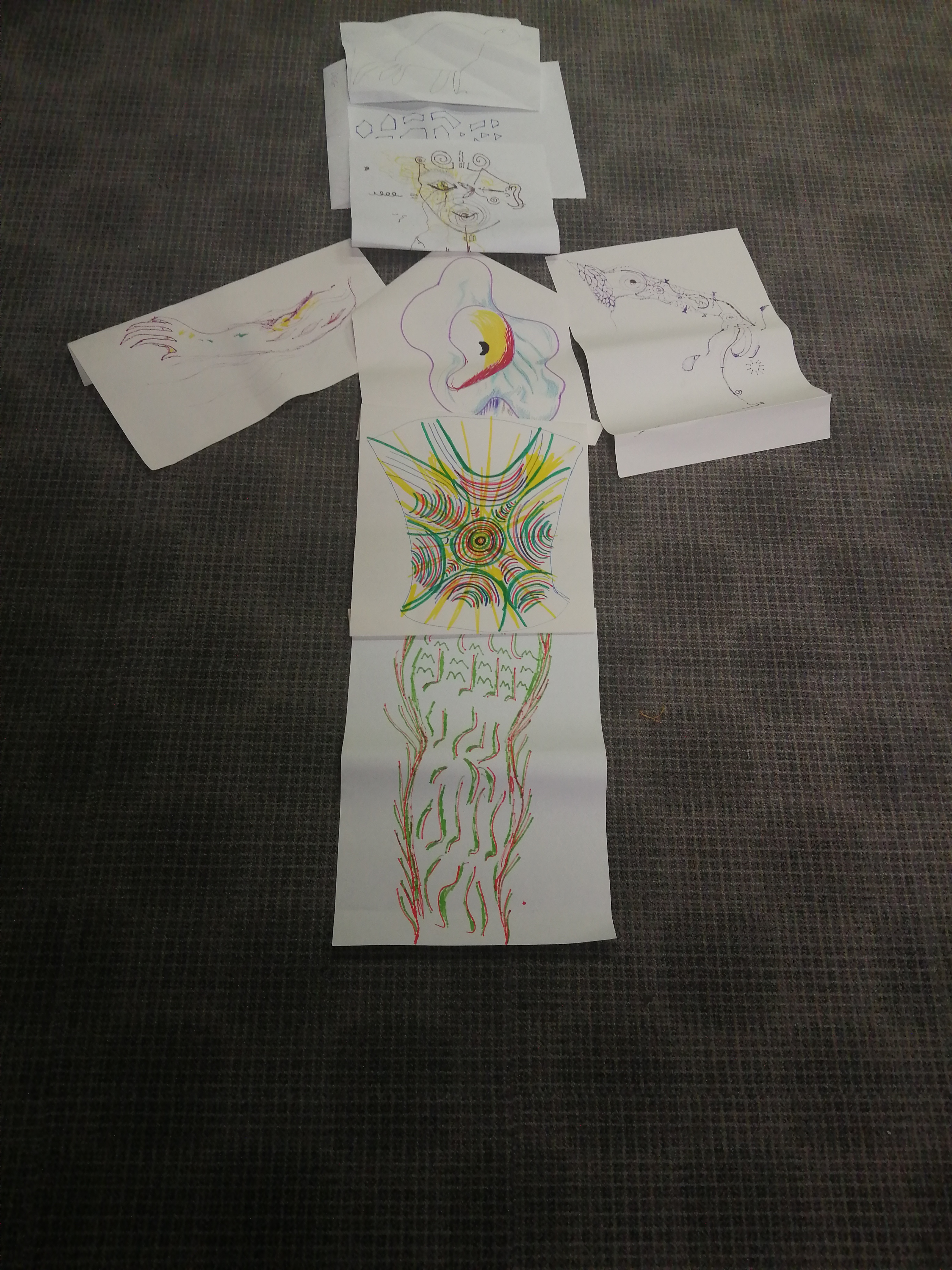
If time were a living creature, what would it look like? How would it move? What would it sound like? What would it say?
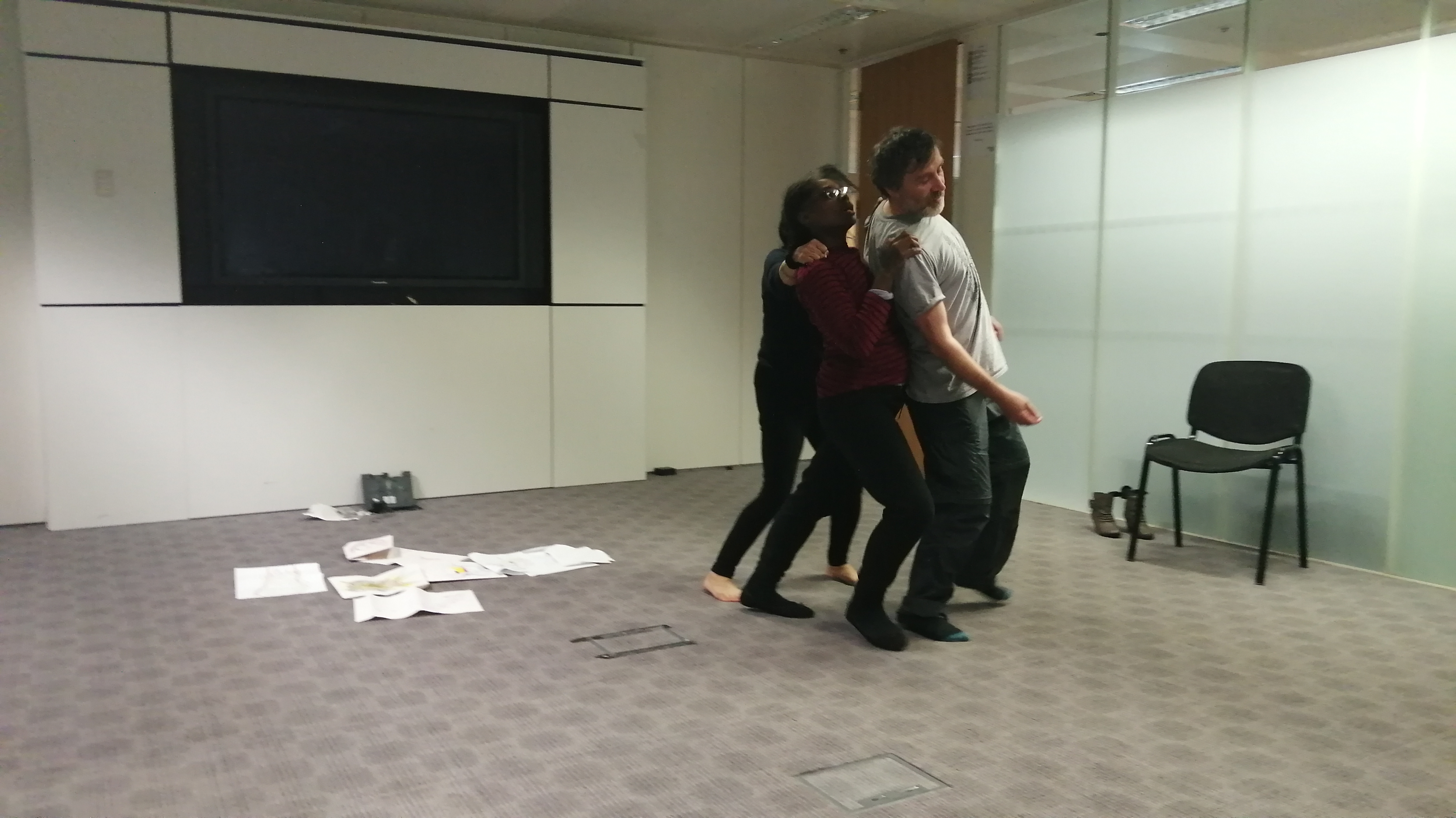
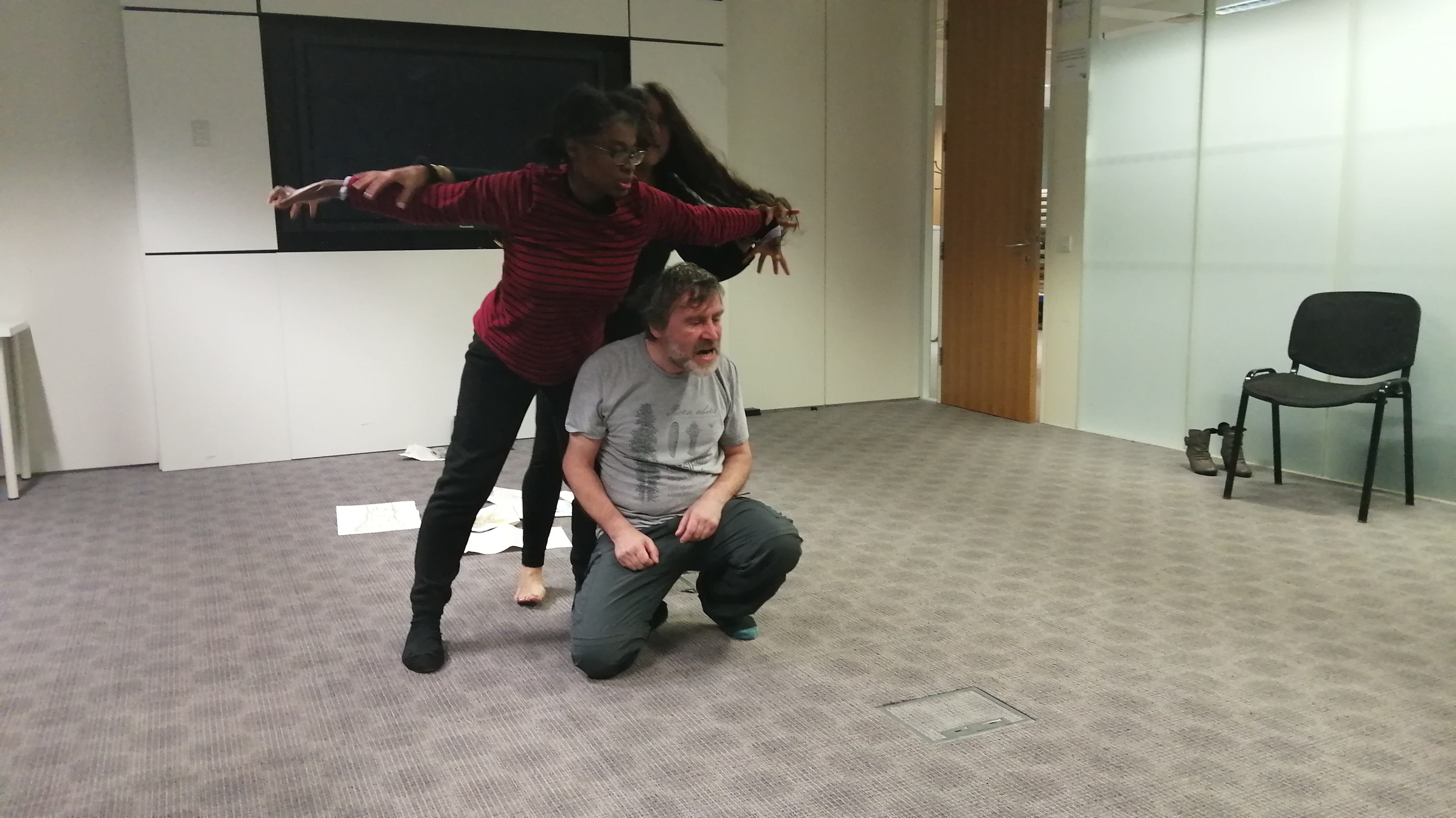
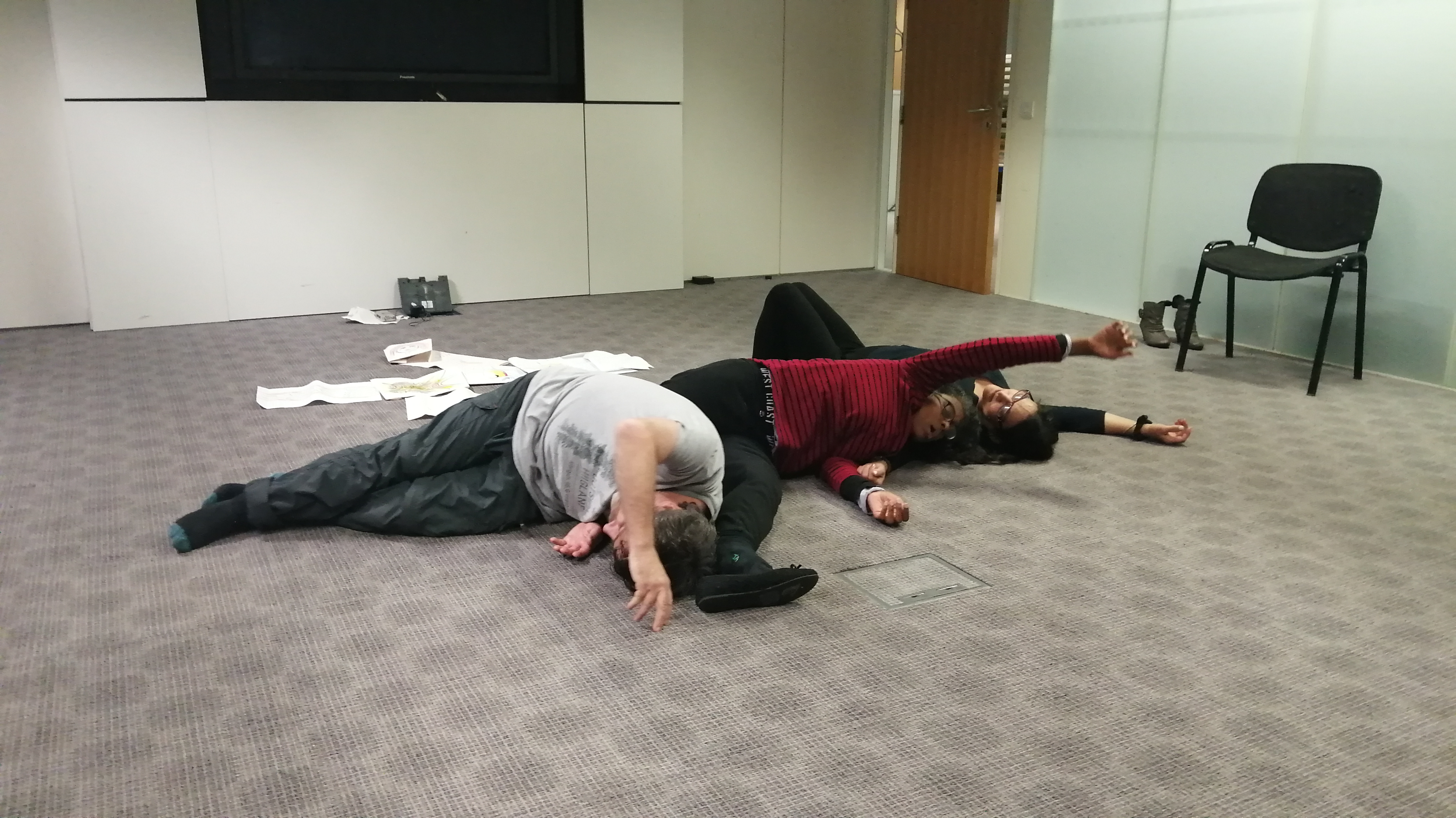
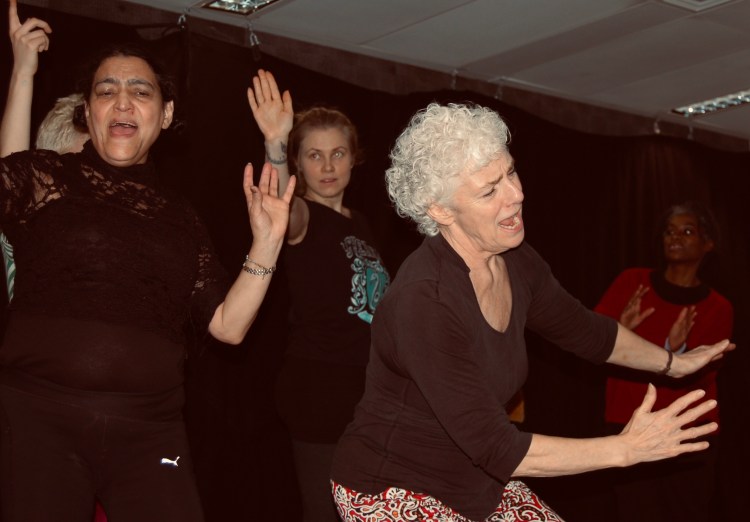
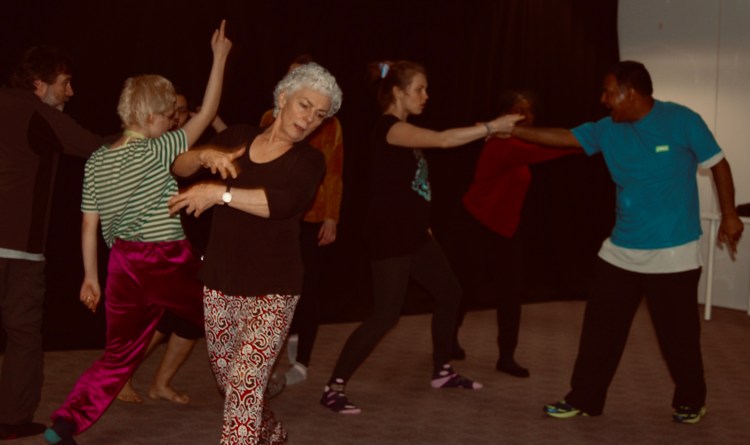
That’s what we explored at today’s workshop. Each one of us was asked to draw one body part of this mythical creature representing time. We then put all of the parts together, and in small groups worked on movement and vocalisations. Here are some impressions from the process, including photos of one of the groups.
We also continued working on our new collective group song, connecting with the theme of time as part of a mythical beginning.
Alone we can do so little; together we can do so much
Helen Keller
‘Liz’ is a professional actor of many years, training at drama school and now teaching in the arts. The workshops help her to keep up with her training and her practice current. She has a great creative flair that spans across multiple mediums, making ‘Red Hat Opera’ workshop the perfect outlet.
When did you start the workshops?
November 2017, I’ve only missed 1 or 2 sessions.
Is acting your main forte?
Actor/writer/performance poet. I also produce for theatre, short films, and teach acting and poetry.
What keeps you coming back?
I think it’s important as a professional that you keep a pulse with your training. I love Guy’s improvisational basis, and I love the group. You don’t often get to work with people you are simpatico with, and they’re just wonderful people. The creativeness is quite spontaneous sometimes and I love that I’m constantly learning something new. My practice is expanding as it’s introducing different methods and is very stimulating.
What is it that you enjoy the most?
The people. I love the people. I love working with other performers. It’s not about whether they’re professional, because a lot of the time you don’t get that. But its a freshness they bring. Everybody has life, life experience, and creativity in the arts is about what you gain from life, reflecting on the true reality.
This is unfair to the other aspects because I love that we compose music and choreograph. I’ve never done either before, so that was exciting. I compose poetry so I understand written composition. But in this case it’s about composing our own music. Guy just has a fresh outlook that constantly challenges your practice in a creative way.
Has it inspired your creative works?
Definitely. Nearly every week Guy is introducing something a bit new. I’m constantly working on things, so sometimes I inject a bit of the creativity that’s come from that, or have new questions to ask. So I start to see my work in a fresher way because I’m now asking questions I may not have before the sessions.
Has it helped in your general life too?
Absolutely. It’s such a relief to be able to have this outlet, especially on a Sunday, so you start the week on a creative high. And you’ve worked with people who are really open and amenable so that sets you off on a good footing for the week. That you are open and amenable, but also able to stand back when you don’t meet people who are necessarily so open and helpful. It also offers you a more creative way of dealing with them.
What are your highlights of the workshop?
Always meeting new people is just a boom and it could be somebody who is a chef, or in the legal profession. Seeing how they let their creativity go and seeing people and myself progressing as the days, weeks, years go by, is just a boom.
I particularly loved the performance that we did, the environmental one. The use of fishing for sound, I absolutely adore that exercise. The way we were so creative in our choices for the piece. I’ve done opera, but trying to do an aria was a challenge and I loved that.
Because it’s such a special project, you want to really consider it and what it’s done for your personal growth. Everyone should have a Guy experience. Again, It just sets you up for the week ahead.
There are light sparks of laughter, too, glowing in the bright bride’s face of rainbows. Sun circles and spins with the sky, which travels beside scuttering butterflies.
Here and there, ants forage for grubs soaked in loam, humble bumbles are lightly being bees and eating buds that are sipping the green liquids from the earth’s core, and on the shores, the delicate toes of calming seas are seeping in foam, wave after wave without end.
And the week is
d r i f t i n g
in the wake of stars shaped like far-flung worlds of wild, whirring air.
Birds are skirting the edges of trails, tails bobbing, beaks throbbing with seeds until the lilting moon drips silver dust, then they are
s l u m b e r i n g
and
s l u r r i n g
their words before sleep.
Ghostlike, they
m u m b l e
with humming mouthes and tumbling tongues, fast, on their perch and whilst they are lolling,
l o n g i n g
for the quick strike of midnight when time is dizzy and double-speed, in their minds, they may snack from dawn until dusk on a feast of light and marshmallow syrups, floating down their throats.
The winged ones, flightless now, are ready, heads turned around, bills tucked to backs, feathery downs – blankets – their beds, with one leg pulled up to their well-fed chests, They test sleep’s waters by tasting its dreams
You can’t use up creativity. The more you use the more you have.
Maya Angelou
Gianpiero is an actor who has worked as a creator and performer in ‘Teatro delle moire‘ in Milan before joining us at Red Hat Opera. Gianpiero is multilingual, positively contributing to his devising and writing process resulting in beautifully worded textual pieces. He also gives a unique and exclusive perspective of group improvisation and shares some lyrics that he has written for his song.
Do you have a previous background in performance, music, theatre, dance movement?
I have performing experience in theatre and dance movement. But not in music. I performed with ‘Teatro Delle Moire’ in Milan. I’ve been there for 2 years. There was a research group with which we explored the scenic body and made very different performances. They’re very good teachers, directors, and they have a good idea about performance. It was like an improvisation sometimes. We had guidelines but they have suggestions about our experience. Maybe we’ll also have a theme. For example, one of the performances in Milan was ‘Calidoscopio’ and we have a team who used paintings. Sometimes you use a motif but there are different stories [as in the performance], and improvisation that we have never planned before. There were interesting things from every person. Like an audience for a painting, they thought about the different stories, the rich experience they gained and related to their own piece.
Why did you want to come to the workshops?
Because I’m always interested in theatre and the body; in performing. The audience can feel maybe more than the speech because with a word you can mix-up a person; but the body sometimes is more clear than speech. The body can give out more information than one word.
And were you interested in the opera element, voice and singing and vocalisation? How did you experience this in the workshops?
I’ve never sung in the theatre and I was scared about that. I started this course for a big performance on how to use sounds, vocalisation. As an actor, whenever I would discover something new, I take a risk being involved with a group, but it was good. Sounds, pitch, rhythm, volume, variation, I use a lot of different things in the dialogue. Maybe I can’t compare between using the body and using sounds but it feels similar because when you’re working with the body, you’re not talking about your feelings and also with sound you are not talking with words what you’re feeling. But in an irrational way, you can understand them. With song you can experience happy, sad, angry, fear, without saying anything.
What improvisation exercises do you think were the most successful? And why?
I remember choosing and using only 5 words to support our improvisation, without having a real sentence or dialogue. Using different volumes, pitch, speed, tone, timbre, you can make a real piece. I enjoyed when I was there and we discovered what I could do and every time its a new discovery.
What is your experience of being part of the group in improvisation? What roles and interactions did you have?
First, we have to forgive our rational mind because it is our worst enemy for any improvisation. I discovered that every time in the group, it was a very good support. I think not everybody was a professional in theatre and improvisation, but nobody was scared. Don’t be afraid to improvise, to give that feeling, that emotion. It was interesting because on this course, we didn’t have a fixed group. I remember that with different people came different results. Everyone brings new things and I remember what they’ve offered to teach me, it was good learning. I liked it very much. Me with that other guy we made an improvisation with the chair and I didn’t know that we arrived at a point, it was funny, we become synchronised and felt we knew each other. We did not know how we reached that point but it was a perfect point to reach to finish the improvisation. It was like a common mind.
How did improvisation encourage you to use your voice?
Every character should be aware of their own life; clothes and voice are important.
The main character that I remember was a part of nature. We were 2 characters and I thought to be a red character, the object was lava. So it was a very low voice, slow movement, but very tough and it was powerful. And when the lava was cold, the character finished. I follow what I think.
How did improvisation help you to create lyrics and music?
As I said, I’m not a musician so I sang it much to my surprise. I say thanks also to the help of Tsivi. It was weird for me because I’ve written song, lyrics and melody. One half was melody, the other half dialogue. It was written for an actor, not for a musician. I was really surprised when Tsivi shifted me to sing, something I couldn’t imagine it. But I played it like an actor.
What skills do you think you developed in the workshops and how will you use them in the future?
I’m more confident with sound, with my voice, with music, and I have improved my knowledge in gestures, movement, theatre and dance. If I am going to play again, I will use them in future, but I don’t perform in the theatre anymore.
Sky and sea – these things, I like them. Sky and sea – these things, I like them. In my travels I enjoy my life.
The captain shouted: Hurry up, not much time is left! We were tired, the boat wasn’t anchored yet.
Sky and sea – these things, I like them. Sky and sea – these things. I like them. In my travels I enjoy my life.
The crew was caught by an amazing sunset, Wind and waves gave us new struggles. The captain shouted: Hurry up, you know what to do! The crew was united. Two men at the sails, Two men at the anchor, And the last at the helm.
Sky and sea – these things, I like them. But more than them, I enjoy my beautiful life, With my comrades and my captain.
The desire to create is one of the deepest yearnings of the human soul.
Dieter F. Uchtdorf
‘King Caryl’ is a regular participant of our workshops. Being a leader of his own external workshops, he loses out on creativity and collaboration. Each workshop allows him to take on exterior direction and reverse his usual role. This can be powerful in allowing him to access the thoughts and processes of participants within a workshop in order to power, develop and inspire his own teachings.
What made you start wanting to attend these workshops?
Guy invited me and I came. It was an opportunity to consolidate what skills I already have and to sharpen them in a very beautiful space and platform.
What makes you keep coming back?
It wasn’t just about singing. I come from a background of comtemporary dance, ballets and modern dance forms and enjoyed the fact that there was movement. Also, creative writing, presenting etc.; to come out with creative ideas. It reignited the flame of creativity.
What do you enjoy most?
A genuine sense of creativity and individuals coming together. It’s not just about me. It’s also about being disciplined and allowing myself to be conducted as opposed to wanting to take the lead all the time. When I’m wearing my other hat, I tend to give direction. I allow myself to lose control simply because I want to have new experiences and new approaches.
How do you think this has helped in your general life?
What’s good is the fitness part. Coming from that [dance] background and doing more of the singing prior to this project was taking its toll. There’s exercise, breathing techniques, yoga and stretching, getting on the floor. You’re redefining your body. Also, your tonality and the way you use your vocals. You may be experienced in it but you’re coming at it from a different angle altogether.
What have you taken into your creative work?
I’ve been made to start from zero, taking full ownership of my work and what I do. Setting goals to work towards, and achieving them. The way that I operate, I do many things in one go so it’s reignited that passion.
What do you personally enjoy about Guy’s leadership?
What I enjoyed most was the format that was being used and the guidance that was happening. It’s not the usual approach. Removing responsibility, I’m a vehicle that needs to be remoulded. It’s a great learning curve with new experiences. And like that, everyone I teach, I give guidance too.
Elise is a business coach by day and by Sunday leads our vocal warm-ups. They combine elements of Guy’s focus on movement and brilliantly complement each other. Although she has prior improvisation experience, there is a lot that she is still able to gain by attending these workshops. Red Hat Opera workshops emphasise the idea of having no leader but encourage a collaborative space where we can get as much out of it as we put into it.
When did you start with Red Hat Opera?
I’ve done it for at least 2 years I think. Guy and I did a concert together and kept in touch after that.
What keeps you coming back?
I like working with him [Guy] as a musician because we did free improvising together. I also love all sorts of dancing, improvising, contact dance, that sort of thing. It’s that combination, it works really well for me. I get the chance to have a good dance workout and it’s also nice that he asked me at some point to do the vocal warm ups; that gets me more involved. I really enjoy the fact that I can work off what he’s done, the more physical things. I can spark off that and tailor it to what he’s been doing or what I know he wants to be done. It’s a very interesting group of people. It’s nice that new people come in occasionally, and the original group, I still see most of them. Also very nice because they’re artists and word people, poets, which is an area that is not my strongest point. I just love the combination of everything and he’s very good at structuring it.
What do you enjoy most?
I love seeing where people start from and where they go to really quickly with this. It’s always been very much a part of my work because, besides singing, I am a coach in the business world. I have done this for 20 years. I’m just so convinced from my own point of view that we learn through the body and through creating vocal sound. I’m convinced by how important that is, so it’s really nice to see what happens.
How does it help in your general life?
I love dancing and I’m getting on a bit, so it’s nice that I still can take that opportunity. It’s also something to do with challenging myself, because there are some things I can do better than others. It’s nice that you can work creatively with people who have a different discipline from yourself. Improvising with musicians is one thing, but in things like contact dance, there’s a give and take. People have helped me with texts for my songs, and I can help them with giving framework to their pieces. Its very nice to have that interaction with people who do different things.
How has it helped your creative work?
I think Guy is a good model as a coach. It’s about the way that he works with people and the group. He’s good with taking on board what people can do and at what level and finding the creativeness in it. Always listening and always looking for what’s happening. It reinforces a lot of things that I know and do work with like for example, really being 100% in the moment which is what he’ll always be telling people to do. In the improvisations that we do, you’re constantly sort of confronted with the desire to do something yourself, and it’s such a great exercise to listen to what other people are doing. Taking a step back from who’s doing what and thinking ‘Where does this need to go? What’s needed? What can I put in here?’
What are your highlights?
I don’t see ‘one’ thing. As I say, I very much enjoy the logical build up. I love doing all the physical stuff. It’s very freeing for me and I really enjoy that.
It really is the whole package. We have done one performance together and that was really nice.
Having really good relationships with people in the group. It just brings so much together, things that are important to me as well.
Within our project we build a sense of community, relationships, security, a place to be you. Some of our members have been with us since the beginning of the Red Hat Opera workshops, but we do get new members discovering us and joining our all inclusive team of creators.
As a demonstration of the variety of people we get attending our workshops, we will be publishing a few posts to showcase their work and talk about what Red Hat Opera has done for them.
Photograph by Susanne Diesner
How long have you been attending these workshops?
Before it started! 2017/2018? Guy organised a symposium at Trinity Laban. I saw it on Eventbrite: Devise a Political Opera, and I thought, ‘This looks intriguing’, so I went along. A few months later he set it up here [at Theatre Deli].
What intrigued you to come initially?
There are a few things about this one that appealed to me. One was just the notion of political opera. I thought, ‘What is that?’, because it clearly had a real-world intent behind it. But also, I was in the relatively early stages of creating sound art works, so this was to me something that I could potentially do to help develop my voice and performance in such a way that I wouldn’t get anywhere else. The fact that it is free is a very big incentive to come and then keep coming.
So what does keep you coming back?
The fact that it was free but also well done and thought through. There was a lot of energy put into it, a desire to teach, to move people beyond where they came from to somewhere else. There was something to admire. I kept coming back because I wanted to support Guy, the person who was running it. He had put so much effort into this task, for no visible reward and it was something I felt really needed standing behind and supporting.
You said you were a sound artist. How has this specifically helped and been involved in your work?
There is a focus on narrative. All the songs that we’ve done, individually at least, have had a narrative element to them. That has been really helpful in the sense that I’ve realised I can do that quite easily. Before this, if I wrote songs, they’d be fragments of poems, but aligning that with a story takes it into a slightly different domain. I’m now creating mini narratives, mini dramas, mini plays, within one song, so that has fed into what I do quite directly. There’s confidence and skills and actual improvement.
Do you have any highlights of this project?
Developing the song that I wrote was an interesting process. Guy gave us a theme: the personification of time. We were given 10 minutes to write something and then told to get up and sing it. And I got more time to develop it because we didn’t actually do a performance. That’s the longest stretch I’ve had to work on a single song. I’m still working on it to be honest, but it’s taught me a lot because initially I couldn’t sing it. What I wanted, I couldn’t quite sing, so in working on it, in singing it in a way that includes changes in key etc, I’ve made it a lot more sophisticated than it ever was. I’m not musically trained in any shape whatsoever. Everything I do, I just think about and work it out, so this has been a really interesting process of developing something through singing it and through trial and error. It has helped to develop my voice, to enable me to do things that I couldn’t do before. But also, structurally, tonally and emotionally – how a song works.
We are currently working on creating an opera about time: our experiences of time passing, memories and visions of the future. We will be sharing materials from the creative process with you.
In the past few workshops we have been exploring the concept of memory. Personal memories, a feeling of the past, a wish to go back or a sense of nostalgia.
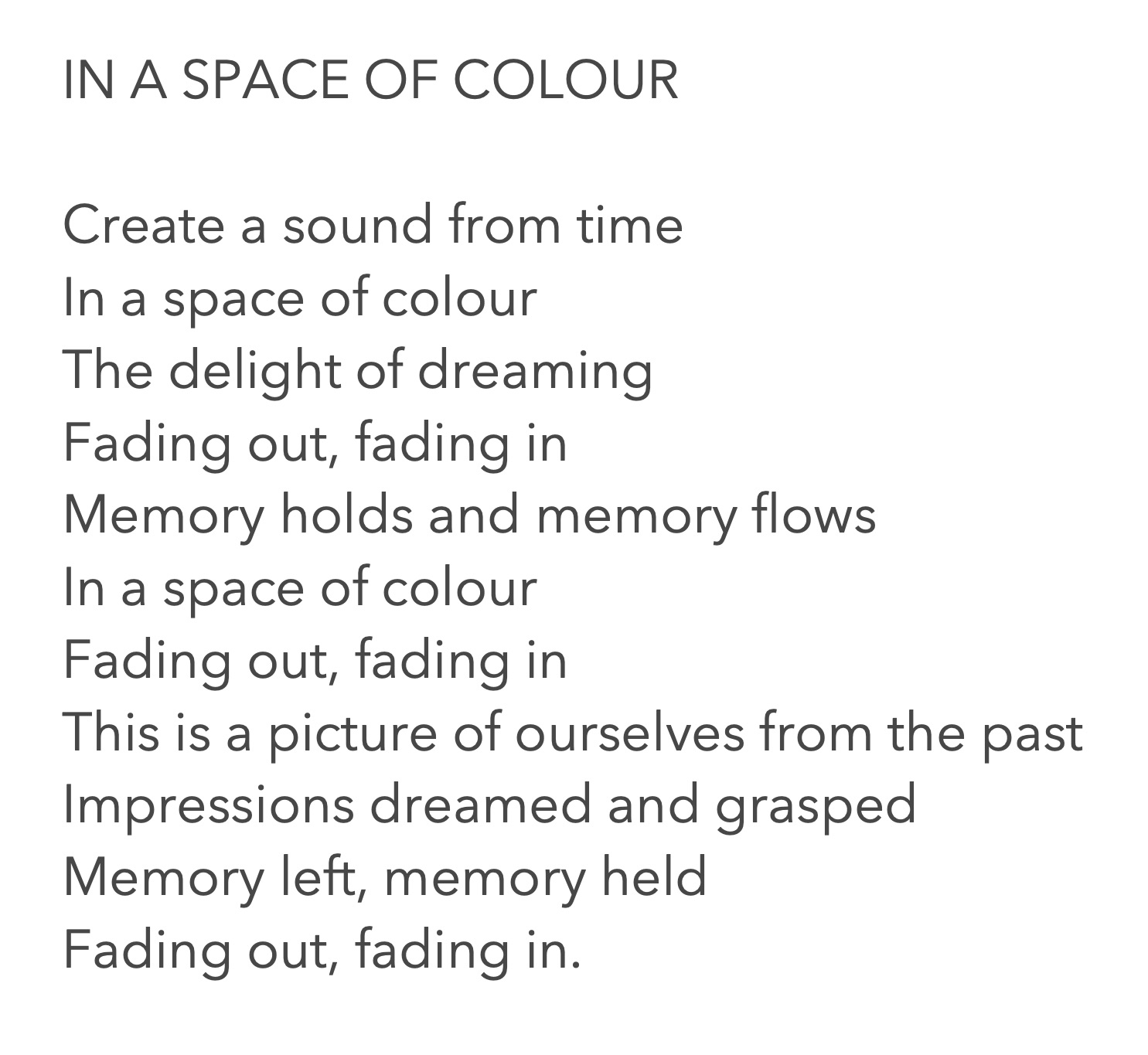
With contributions from all the participants, we created our first group song for the new opera. The lyrics and music were created collaboratively. We are delighted to share the lyrics here (you will need to wait for the finished opera to hear the song!). We are also sharing a vocal improvisation about memory. Enjoy!




 Red Hat Opera Workshop